Achievement Unlocked: I’m going to my first Cure concert


My first encounter with The Cure was likely through my older brother’s cassette of their 1985 release, Head on the Door. The eerie fluorescent and twisted figure on the cover meant that he had to keep it out of sight from my religious, emotionally unstable grandmother who raised us.

The Cure Head on the Door album cover. Title is in scrolling blue letters. Blurred figure photograph by Parched Art, Andy Vella and Cure guitarist Porl Thompson

Her moods often robbed us of joy. We weren’t allowed to be happy. Memories of her storming into my room while my brother, sister and I were having fun playing Monopoly hold my breath. She flipped the game board, ripped it in half along with all the paper money, tossing it like confetti, screaming that we were demons for gambling on a Sunday. 

Between her paranoia and attending Catholic school, I wouldn’t dare be caught listening to Pornography (1982) or any of The Cure’s early albums before Standing on a Beach: The Singles, in 1986. I was safe with the unassuming cover of an old man’s friendly face.

The Cure Standing on a Beach The Singles Album Cover. Close up photo of an old man worn by time wearing a dark coat.

The Cure was taboo. Listening to them was an act of rebellion.

From the wound up twang of Fire in Cairo, the angsty bass in Screw to the happy-go-lucky melody of In Between Days and shattered calamity of Disintegration, The Cure mirrored my topsy-turvy emotions, giving me permission to be happy in my sadness. 

During the pandemic listening to The Cure was an act of healing. Under my own roof now, I could appease my inner child thanks to YouTube and absorb their live performances over the last four decades. I marveled at their power and vitality on stage, commiserating with heartfelt confessions of fans in the comments.
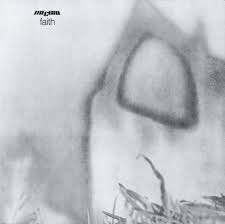
Determined to gift myself the joy I missed in the past, I went to Amoeba in Berkeley, bought a turntable and The Cure’s albums from 1979 through 1982: Three Imaginary Boys, Seventeen Seconds, Faith and Pornography. 

Opening the plastic released ghosts that could finally dance towards heaven or hell.

Robert Smith’s voice is timeless, an intoxicating elixir mixed with his bandmates’ deep synth, bass, drums and guitar that make me feel like I’m on a train without brakes, careening off the rails towards sweet oblivion, sparks from the friction casting a warm glow over my grief. Their sound is an alchemy that goes from fire to ice to vapor in a beat.

On Pornography’s One Hundred Years when Smith moans, “It doesn’t matter if we all die.” I laughed.

I cried, nostalgic for the kid I never got to be, the one who was free to play games and who went to all The Cure concerts. I vowed to see them live if I ever left the house again. 
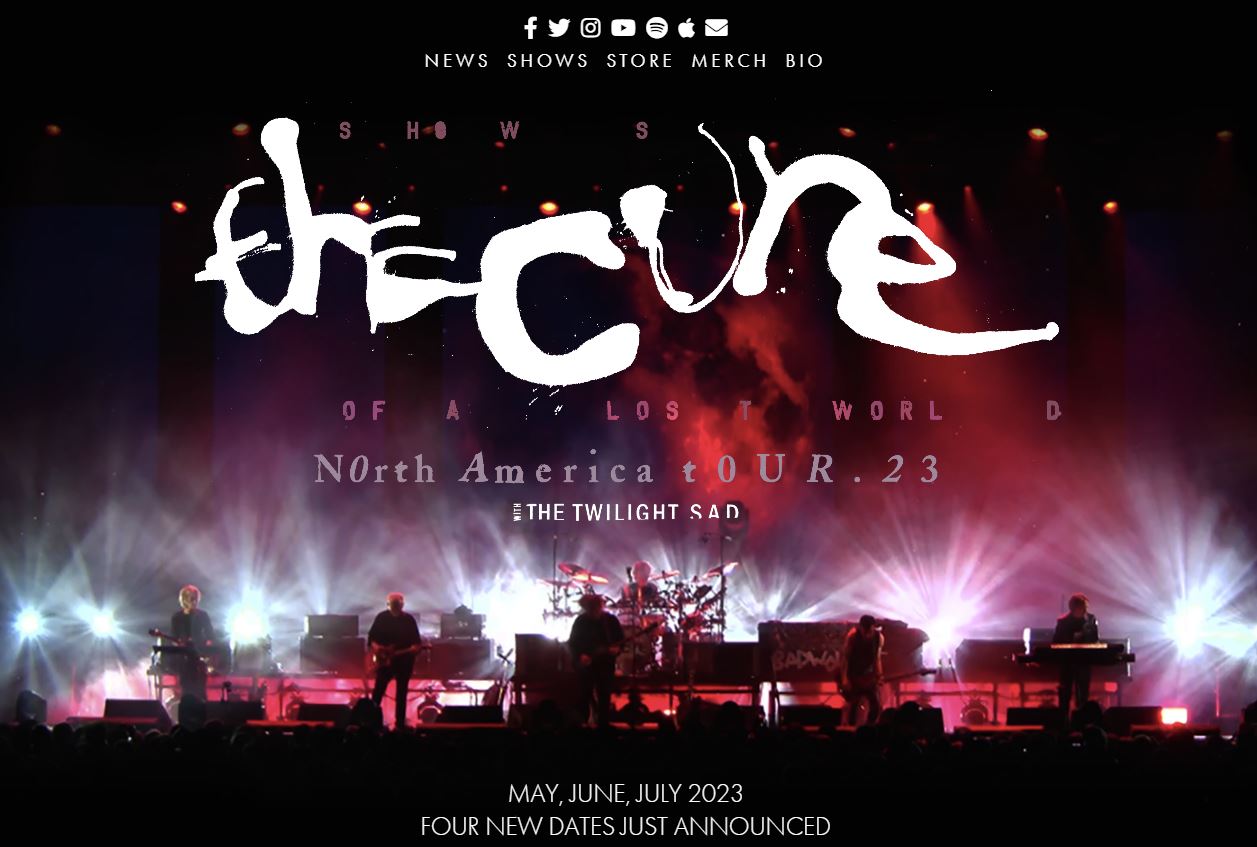


Now they’re here touring in the U.S. for the first time since 2016. Lead vocalist and guitarist Robert Smith, bassist Simon Gallup, keyboardist Roger O’Donnell, drummer Jason Cooper, guitarist Reeves Gabrels, and guitarist/keyboardist Perry Bamonte launched Shows From a Lost World North American Tour in New Orleans on May 10th. They treated their fans to four new songs introduced during their European leg, and a couple they haven’t played live since 1987: Head on the Door’s Six Different Ways and Kiss Me, Kiss Me, Kiss Me’s synth ballad 1000 Hours.


I have tickets for the Cure tomorrow, Saturday, May 27th at the Shoreline. 

My anticipation is fueled by following the tour with over 12,000 Cure fans around the globe on the Shows of a Lost World Tour Facebook group started by Carl Tapia during the European Tour last winter. Moderated by a stellar volunteer team, the community is a mosaic of the latest livestreams, playlists (courtesy of @markpeterboro), memories, encouragement for those still seeking tickets to the sold out shows and misty-eyed first-timers like me asking how to break in a new pair of Docs.

It was an especially fun place to watch Robert Smith go viral during his epic battle with Ticketmaster over their predatory dynamic pricing when tickets went on sale in March.

I thanked Goth for getting a verified fan presale code and even received a partial refund on excessive fees “All thanks to Robert Smith.” I am whole again.

“This is all thanks to Robert Smith” Refund Email from Ticketmaster

The Cure plays at the Shoreline Saturday May 27th and Monday May 29th, Opening for them is the Twilight Sad. Parking Lots Open: 4:30 PM Doors Open: 5:30 PM Gates Open: 7:00 PM

Shows from a lost world tour 2023 dream Playlist

Ten favorites.
A Forrest

Disintegration

In Your House

Fire in Cairo

One Hundred Years

To the Sky

Just Like Heaven

Strange Day

Funeral Party

Pictures of You

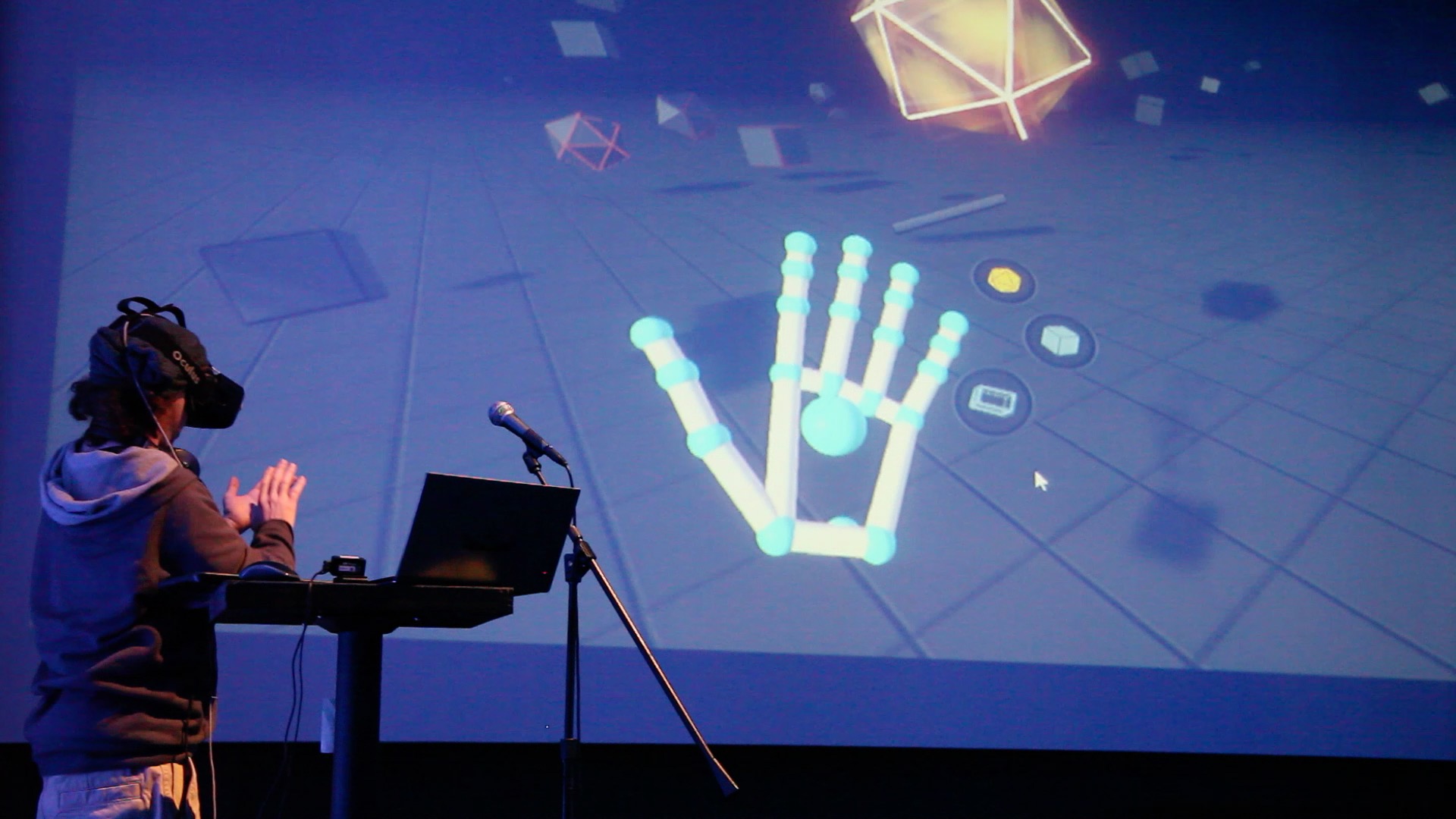
Leap Motion launch at SFVR #12

February 20th, 2016 – San Francisco’s largest VR meetup returns to the Gray Area Theater for an incredible night of virtual reality demos and presentations from ground-breaking companies that are inventing virtual reality’s evolution.

Watch Leap Motion’s CTO and Co-founder David Holz, introduce Orion: The Next Generation of Leap Motion Technology and download their new hand tracking software: http://www.leapmotion.com/developers

Thanks: David Holz, Matt Sonic, Angelo Hizon, Olga, Tony Parisi
http://www.meetup.com/virtualreality/
=========================
Subscribe to Quirkeley for local, fresh and organic videos.

Off Planet VR open call for entries

Gear up Thursday December 3rd, 6-9pm for Off Planet, 

an evening exploring the Metaverse.

I’m thrilled to announce Quirkeley is producing Off Planet VR, a 3-hour showcase of virtual reality and 360 video experiences from the architects, developers and dreamers who are charting this radical new territory. 

Thursday December 3rd from 6-9pm join me and scores Bay Area VR pioneers, developers and Cal students for a night of virtual fun and games in the heart of Downtown Berkeley at NextSpace, 2081 Center Street. Discover your next adventure. #OffPlanet.

Demo submissions are now being accepted until October 25th, 5pm. Final program will be announced early November. Click here to submit your request for space, RSVP or see the current schedule.

Off Planet VR is produced by Quirkeley, Berkeley’s fresh, local and organic video source and Griffo Project Productions. Visit us at quirkeley.com, and follow us on Twitter @Quirkeley.

Sponsored by the Berkeley Startup Cluster

New Mo’ Cut Kickstarter launch

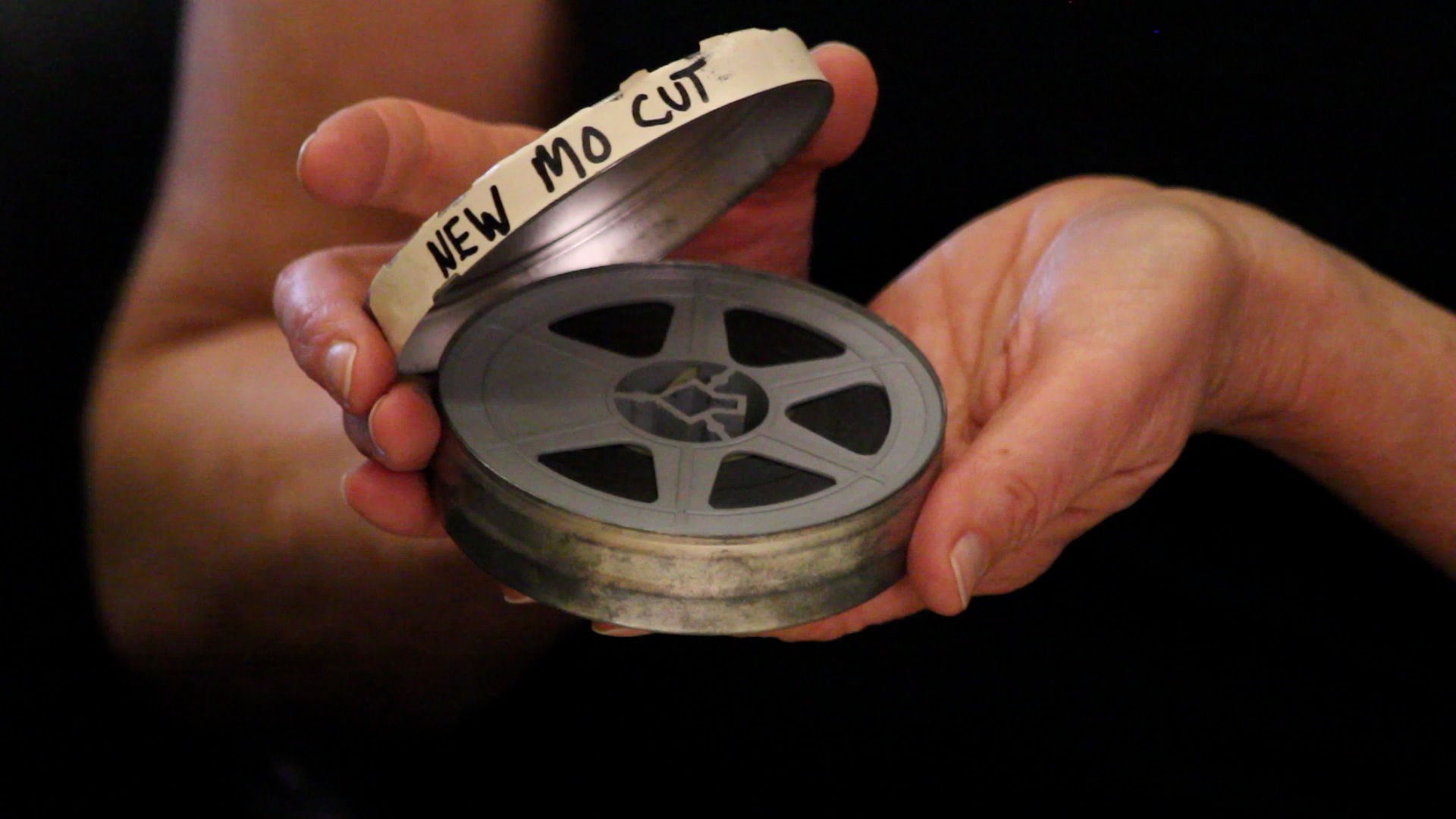
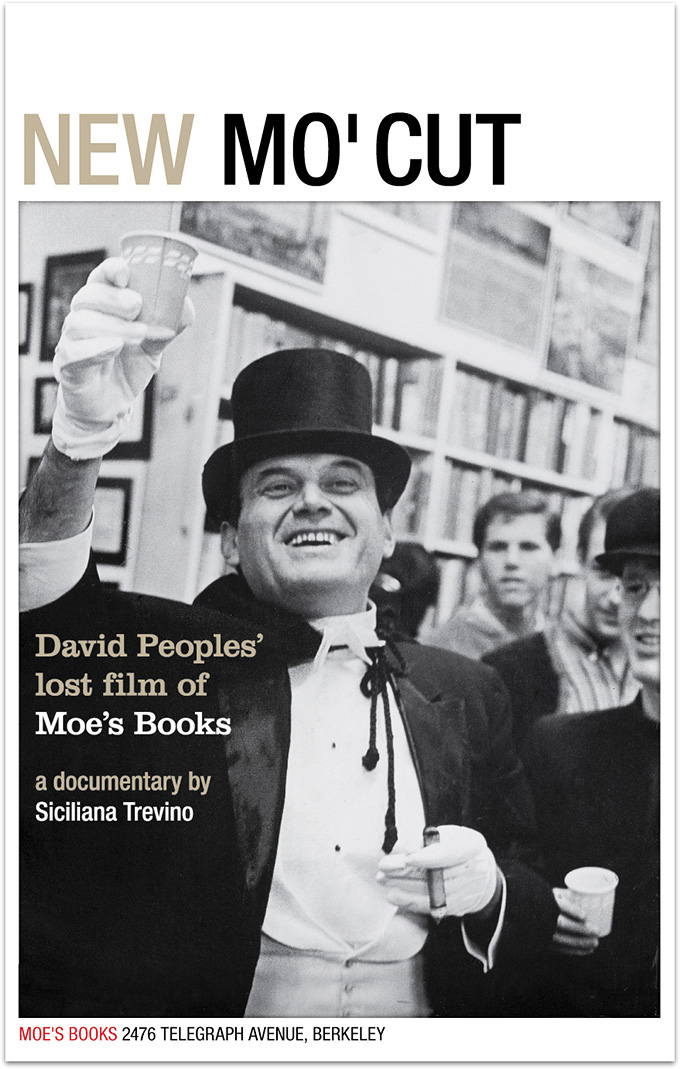
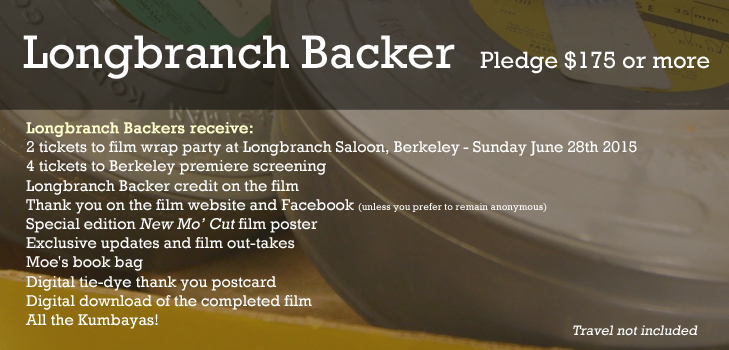
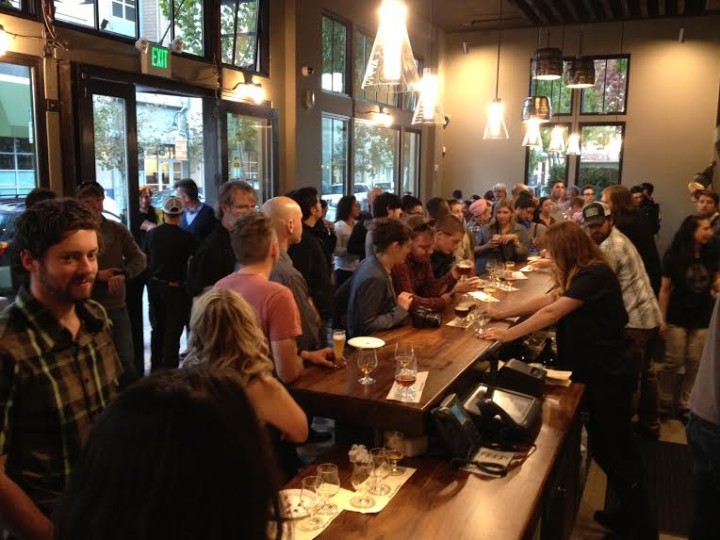
NewMoeCut-posterIn early February when I started working on New Mo’ Cut: David Peoples lost film of Moe’s Books I didn’t know who shot the found 16mm footage of Moe at the opening night party for his Telegraph Avenue bookstore and I never thought I would launch a crowd-funding campaign. By mid-March I was shocked by the discovery that the filmmaker was Oscar-nominated screenwriter David Peoples’ and the following realization that crowd sourcing is a dynamic way to build a community around the film, while raising vital funds that will help bring this unique Berkeley story to the big screen. I couldn’t miss this opportunity to take New Mo’ Cut to the next level and learn how to navigate the scary all-or-nothing world of Kickstarter. The campaign to raise $8,500 by 3pm Friday May 8th, launched at Moe’s Books last Tuesday April 7th. With your support of New Mo’ Cut will be completed by the end of June in time for festival submissions. Check out our distinctly Berkeley rewards for backing the film including premiere screening tickets (Mid-summer date TBA) a walking tour with Quirky Berkeley’s Tom Dalzell (fall date TBA), and tickets to our wrap party at Longbranch Saloon on Sunday June 28th. I’m grateful my former colleagues at the award-winning news site Berkeleyside.com are supporting the film as its exclusive media sponsor.

Click here tO SUPPOrt NEW MO’ CUT on Kickstarter

I look forward to sharing updates on our progress over the next few weeks and when we reach our goal of $8,500. You can follow updates on Quirkeley.com or on our Facebook page and Twitter.

About the Film

New Mo’ Cut: David Peoples lost film of Moe’s Books is a short documentary chronicling the surprising discovery at the Berkeley dump of a 16mm film of Moe Moskowitz at the opening night party for his legendary Telegraph Avenue bookstore in 1965. Kevin Laird, a recycler working for Urban Ore, found the film canister and managed to deliver it into the hands of Moe’s daughter Doris who didn’t know of its existence or origin. Soon after the film is digitized and put online, Doris discovers the filmmaker is Oscar-nominated screenwriter David Peoples. The two-minute, forty-six second workprint is a time capsule of Berkeley and a peek into Peoples’ early documentary film explorations before gaining notoriety as a screenwriter rewriting Blade Runner, earning an Oscar nomination forUnforgiven and co-writing 12 Monkeys with his wife, screenwriter Janet Peoples. New Mo’ Cut: David Peoples lost film of Moe’s Books recalls one of Telegraph’s larger than life characters, while musing on books, filmmaking and reclaiming history from the waste stream.

Featuring
  • Doris Moskowitz, Owner, Moe’s Books
  • David Peoples, Screenwriter
  • Janet Peoples, Screenwriter
  • Kevin Laird, Artist
  • Gibbs Chapman, Projectionist, BAM/PFA
  • Alice Schenker, Moe’s Books party guest
  • Dan Knapp, Founder & President, Urban Ore
  • Michael Mascuch, Associate Professor, UC Berkeley

10 YouTube Favorites of 2013

From wrecking balls and fox calls, to Harlem shakes and Twerk Fails, 2013 gave us another powerful dose of viral video.

With the release of YouTube’s Rewind 2013 listing their top videos of the year, I examined my viewing history and selected 10 videos that punctuated my year and had me pressing share. Not all were produced this year. Admittedly, the absence of cat videos surprises me. 

10. YELLO – OH YEAH

Moving from New York City to Berkeley at the top of 2013 had me singing, “Even more beautiful.” Save Ferris.

9. GrandMa Drummer

I’ll have what she’s having.

8. CATCH: A HANDIMATION THROUGH GLASS

Ok Glass. A woman’s smudged phone number sets off an animated escapade in a New York coffee shop.

7. GOL PERRO

Just another dog on YouTube having its day.

6. SAFE AND SOUND

While everyone was playing Blurred Lines, Safe and Sound was my summer jam.

5. Youtube challenge – I told my kids I ate all their halloween candy 2013

For the third year in a row Jimmy Kimmel’s Halloween YouTube Challenge spins taking candy from a baby into viral comedy gold.

4. UGA MEN’S SWIM & DIVE HARLEM SHAKE

My favorite version of the Harlem Shake. Hold your breath!

3. EVERYTHING COUNTS

I’ve been playing this divine version of Depeche Mode’s Everything Counts by cover band DMK, out of Bogotá Colombia, ever since it showed up in my Facebook feed a few months ago.

2. COOKING WITH DOG

While searching for beef steak donburi recipes with my Boo we found this weekly cooking show hosted by a poodle named Francis.

1. HASHTAG WITH JIMMY FALLON & JUSTIN TIMBERLAKE

Are Fallon and Timberlake our generation’s Martin and Lewis? #ICantStopHashtaggingWithMyFingers.

Eat the Street: Caffe Strada

Invention, tradition prevail at Berkeley’s revered outdoor cafe. 

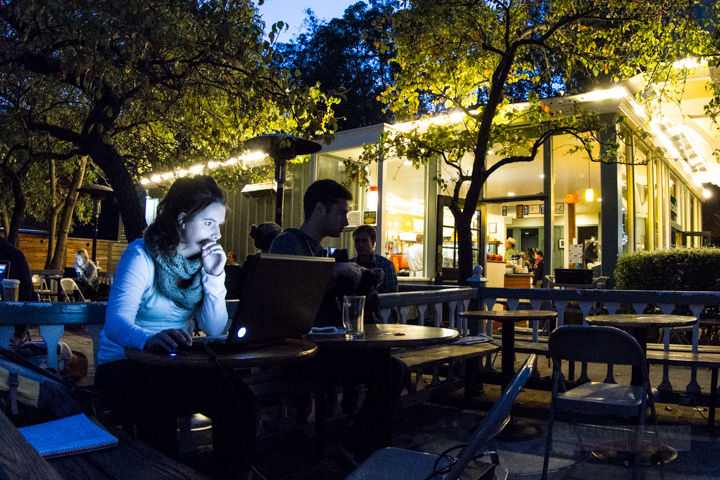
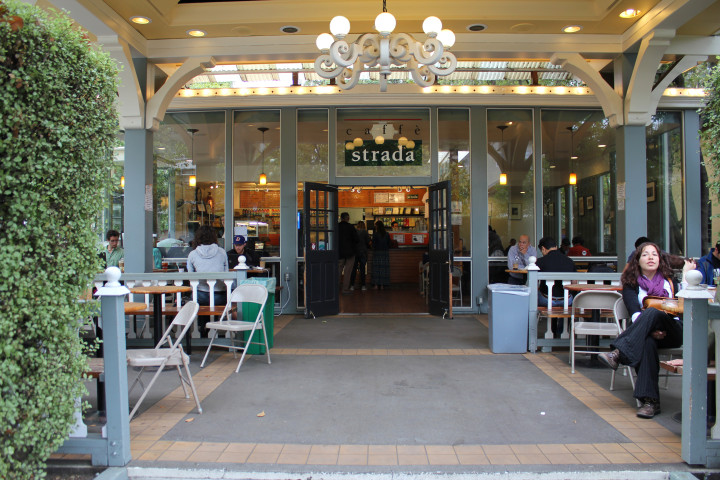
Caffe Strada on a recent autumn night. Photo: Ira Serkes

Originally published on Berkeleyside.com Nov. 4, 2013

In a new occasional series, Berkeleyside’s Siciliana Trevino sets out to eat at, and report on, every restaurant on College Avenue — from Bancroft to Broadway — taking in the gourmet goldmines that are the Elmwood and Rockridge neighborhoods in between. Second up: Caffe Strada.

At a time when boutique roasters like Blue Bottle, Verve and Stumptown are making their mark on the artisanal coffee trend, Caffe Strada remains true to its roots, serving only espresso made from a proprietary blend of organic fair trade beans supplied by McLaughlin Coffee Company in Emeryville. The café hasn’t served drip coffee since owner Daryl Ross opened Strada on Jan. 30, 1989.

“That’s an intentional choice of mine because I feel like we’re specialists in espresso and I like not diluting the concept by having other stuff,” said Ross, a UC Berkeley graduate who also owns the Free Speech Café on campus, Café Zeb at the law school, and Freehouse, just across the street from Strada. For someone who supplies Cal with its main source of caffeine, Ross is pleasantly down-to-earth and unassuming.

“Every part of me loves this idea of Strada being this simple, pure, pseudo-European business. Like when you go to France, this is what we have, you know?”

The European gourmet/artisan concept is a renowned Berkeley tradition. Strada’s take on it came after Peet’s established itself as the first name in gourmet coffee in 1966, well before you could get a bottled iced cappuccino at any gas station. Once upon a time, the only place you could get a white hot chocolate was at the southwest corner of College and Bancroft, where Strada became a beacon for them.

“According to our chocolate supplier (family-owned Guittard Chocolate in Burlingame), no one — in Northern California at least — was making white hot chocolate before Strada,” said Ross, speaking with his hands and leaning forward with the humble confidence of an insider who knows the back story.

“White hot chocolate is his creation 100%,” said Mark Spini, vice-president of sales at Guittard, who worked with Ross in the early days. “Now it’s a staple on every coffee store’s menu.” Guittard, Spini said, manufactured the first white chocolate chips for the consumer market. Ross used them in his recipe after seeing samples at Guittard.

Strada Bianca Mocha (Ross’s Theorem). Photo: Siciliana Trevino

White chocolate has a lower burning point than regular chocolate. Its consistency is unruly when heated; it is easy to turn it into a clumpy mess. For months, Ross and his team experimented with different techniques until they found that melting white chocolate chips with milk did the trick, and the Strada Bianca was born ($2.95, $3.40). Their discovery also led them to create the café’s signature drink, the Strada Bianca Mocha — white hot chocolate with espresso ($3.10, $3.65). Served hot or cold, its velvety sweetness is like drinking an electric lollipop. The foam on top is whipped into a dense meringue-like texture that melts in your mouth. In 1997, on a tip from a UC Berkeley intern who raved about them, then-Vice President Al Gore came to Strada to try the Bianca Mocha after an appearance on campus.

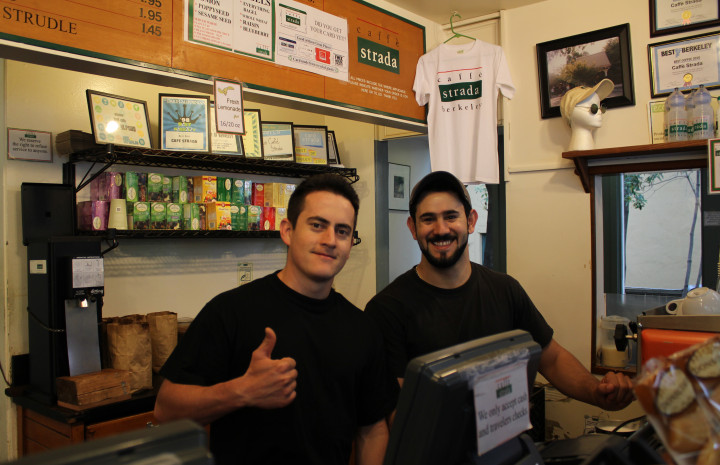
Complex Magazine’s 2011 “Top 10 College Cafés in the U.S.” listed Strada at #8. The walls of the café are crowded with “Best of” awards going back to the mid-90s. Behind the twin orange espresso machines, emblazoned with gold lion medallions and the La San Marco brand name, are baristas who have to apprentice for at least three months before making coffee. Some have been with Strada since the beginning. And working there is a pedigree of sorts, said Ross. “Once they get Strada-trained, it’s like the stamp, and then other places take them.”

Where the white hot chocolate (Strada Bianca) was born. Photo: Siciliana Trevino

Strada’s drink menu also includes its own blend of tea with notes of cinnamon and clove. The café serves 25 flavors of Torani Italian Soda ($2.25 small, $2.50 large). (It used to carry every flavor.) There is a small but diverse selection of muffins, pastries, bagels, fruit cups, yogurt, apples and bananas. The business is cash only, but an ATM is located on site.

Strada is in a prime location next to Cal, steps from Memorial Stadium and International House. Berkeley Law and the Phoebe Hearst Museum of Anthropology are across the street, with the Berkeley Art Museum and Pacific Film Archive a few doors down. Strada, with its maze of patio tables shaded by flowering pear trees, and its corner view of two converging one-way intersections buzzing with students, cars, cyclists and buses, is ideal for people-watching and inspiration. While it’s easy to spend hours there, you won’t lose track of time: you can hear the Campanile bells striking at the top of the hour.

“The neat thing about Strada is it’s sort of a public space-private space kind of feeling you get,” said Ross. “You’re sort of intimate with the person in your section, you relate to the people out of your section…(all) looking out onto the street in this wonderful way.”

Strada baristas Carlos and Christian. Photo: Siciliana Trevino

The location also has a place in history. In 1986, when the café was run by Espresso Roma Café —which still has six locations in Berkeley — one of the most important conversations in number theory took place on the patio. Harvard professor Barry Mazur and Cal professor Ken Ribet realized over a cappuccino that Ribet had solved the Epsilon Conjecture (Ribet’s Theorem) about a rare elliptic curve known as Frey’s Curve. The event motivated Sir Andrew Wiles to prove Fermat’s Last Theorem, which he did eight years later, in 1994. (You can watch professor Ribet recount the story, while sitting on Strada’s patio, in the BBC documentary Fermat’s Last Theorem.)

Strada will celebrate its 25-year anniversary Jan. 30, 2014. Said Ross: “Always for the big ones — for the 10th anniversary, our 20th anniversary and I’ll do it again for 25 — we give away free coffee the entire day. The lines are insane. We get the Cal Band to play. You know what I should have started a long time ago? One of those boards where people put up their pictures, you know, saying we met here and 20 years later we’re still married.”

Caffe Strada is located at 2300 College Avenue. Up next on Eat the Street: Shen Hua.

Click the “fork and knife” markers for business details. We’ll update the map as the journey continues. View Eat the Street in a larger map.

Eat the Street: Elmwood Café

A timeless neighborhood cafe defines community.

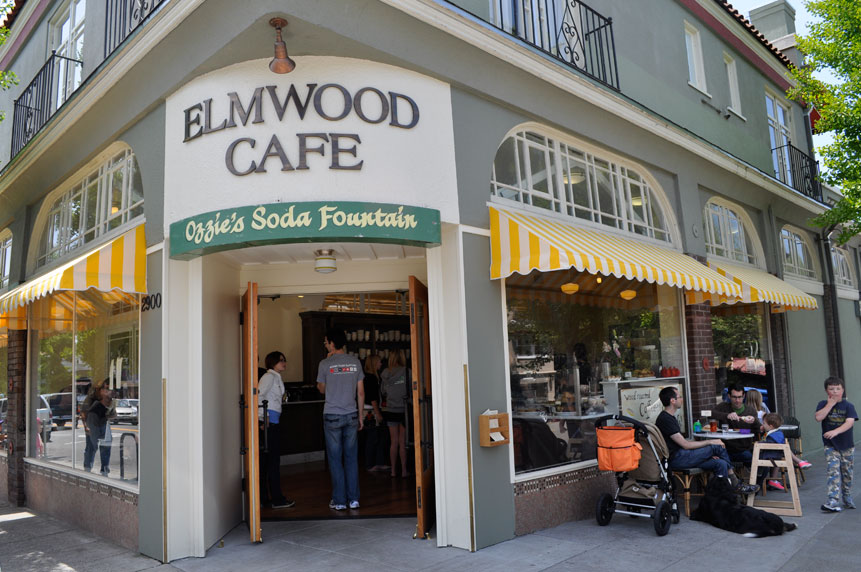
The Elmwood Café on College at Russell has a storied history. Photo: Tracey Taylor

Originally published on Berkeleyside.com, July 18, 2013.

In a new occasional series, Berkeleyside’s Siciliana Trevino sets out to eat at, and report on, every restaurant on College Avenue — from Bancroft to Broadway, taking in the gourmet goldmines that are the Elmwood and Rockridge neighborhoods in between. First on the list? The Elmwood Café.

The intersection of College and Russell was oddly absent of the congestion that normally plagues it at dusk. DJ and I were on the sidewalk, at a crossroads about where to get a drink, or maybe have dinner.

DJ and I often wondered what it would be like to eat at every restaurant on College Avenue from Bancroft to Broadway. It was a what if…? that became a real possibility when I left New York City in April to live with him in Berkeley, where we both originate. But that night in June we vowed that if we ate out on College, we would go forward with our long-held plan.

Despite being close to farmers’ markets, owning a sharp chef’s knife, a rice cooker, a food processor and a Griddler, we eat out many times a week, mostly from a handful of the same favorite restaurants we’ve had since childhood: Gordo’s, Kirala, Ajanta, to name a few. Out of habit, we generally ignore some of the newest and trendiest spots. We’re usually too lazy and hungry to get creative and, besides, we know where to go to get around our particular food aversions. DJ doesn’t eat Chinese food, runny eggs, nuts, or anything that even hints at mayonnaise. I’m not a fan of spicy food. Trying all of the restaurants on College would take us into new places and deepen our awareness of our eating habits.

We had already scouted the scene. In May, pen and paper in hand, we had recorded the name and address of every restaurant and sit-down café along the 2.4-mile stretch of College between Bancroft and Broadway. We counted 79 eateries. Then along came the June 1 opening of A16. That made it 80.

Determined to finally embark on our quest, we crossed the street to the Elmwood Café. The building at 2900 College Avenue at the corner of Russell first opened its doors as The Elmwood Pharmacy and Soda Fountain in 1921 and has had a legacy since then of defining community. Grab a copy of Tales from the Elmwood by Burl Willes to read about its landmark history and heyday as Ozzie’s Soda Fountain, owned and operated by Ozzie Osborne, a World War II fighter pilot-turned-activist who, in 1981, helped organize and pass Measure I to protect independent business owners in the retail district.

Elmwood Fountain menu, circa 1921. Courtesy Berkeley Historical Plaque Project. Click on the menu to view larger.

By the mid-2000s, Ozzie’s and the pharmacy were struggling. The doors shut in 2007, but, in 2009, Michael Pearce, who used to frequent Ozzie’s when he was an undergraduate at UC Berkeley, purchased the building. He restored it, retaining many of the original fixtures, including the soda fountain counter and stools. He repainted the Ozzie’s sign, which is visible above the café’s front door. The café’s yellow and white striped awnings evoke the time of five and dime stores and Key Route streetcars.

Pearce brought in Kara Hammond, formerly of Café Fanny, to manage the space, which focuses on local and sustainable food. It opened for business in March 2010 and donates half its profits to charities voted on by its customers.

I had been to the Elmwood for a morning latte and afternoon tea, and frequently coveted their pastries, but I had never eaten dinner there.

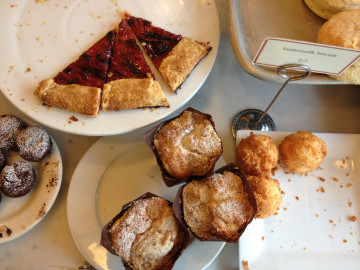
Elmwood Café pastries. Photo: Siciliana Trevino

DJ and I perused the menu, which centers on food that’s easy to prepare behind a counter – Elmwood Café does not have a full kitchen. It is heavy on soups, sandwiches and salads. You place your order at the counter and then find a seat among the many marble-topped tables. A laminated sign punctuated with a heart reads: Thank you for bussing your own table!

Still, we found plenty to eat. We ordered curried split pea soup to share ($6.00), a grilled pastrami sandwich without aioli for DJ ($8.50), and a hummus and veggie sandwich ($8.00) for me. He drank a stein of Steelhead Extra Pale Ale on tap ($4.75) and I had a glass of a Vinegarden blend of sauvignon blanc and chardonnay ($7.50)

We headed outside for a sidewalk table and sat down between a group of cyclists and a couple on a date. When our food arrived I was impressed. The soup delivered on comfort, texture and bite. A fresh mound of organic mixed greens not over-dressed in vinaigrette accompanied a sandwich filled with house-made basil hummus, avocado, carrots, cucumbers, sprouts, red onion and organic greens on Acme whole-wheat seed bread. I rarely order veggie sandwiches; this one was hearty enough to share and worth the price. To me it was a deal compared to what I would have paid in Manhattan for a sandwich this fresh. I was glad to be home.

Elmwood Café Grilled Pastrami, hold the aioli. Photo: Siciliana Trevino
Elmwood Café Grilled Pastrami, hold the aioli. Photo: Siciliana Trevin

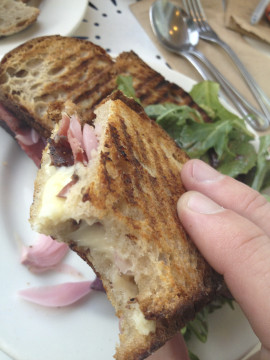
Even without the horseradish aioli, DJ’s sandwich was a Berkeley food talisman made of toasty grill marks on Acme levain, Golden Gate Pastrami, pickled-red onions and melted Gruyère that tasted as good as it looked. I wouldn’t stop taking pictures of it, irritating DJ. I want to make this sandwich at home. Anything’s possible now that my bed isn’t next to the stove and I don’t have to use my refrigerator for a closet.

As we sat there lingering over our dishes, enjoying the magic hour and the glow of this timeless corner café, a father and son rode past on their bikes. The son asked his father, “Is it the last day of school for all the big kids?” “Yeah,” answered the father.

DJ leaned in with a wry smile: “And the beginning of the rest of their lives.”

We raised our glasses for a toast.

“To the big kids, the Elmwood Café and to the 79 restaurants ahead.”

The Elmwood Café is at 2900 College Ave. Visit the Elmwood Café website for details about the menu and opening hours. Up next on Eat the Street: Caffe Strada.

First Contact

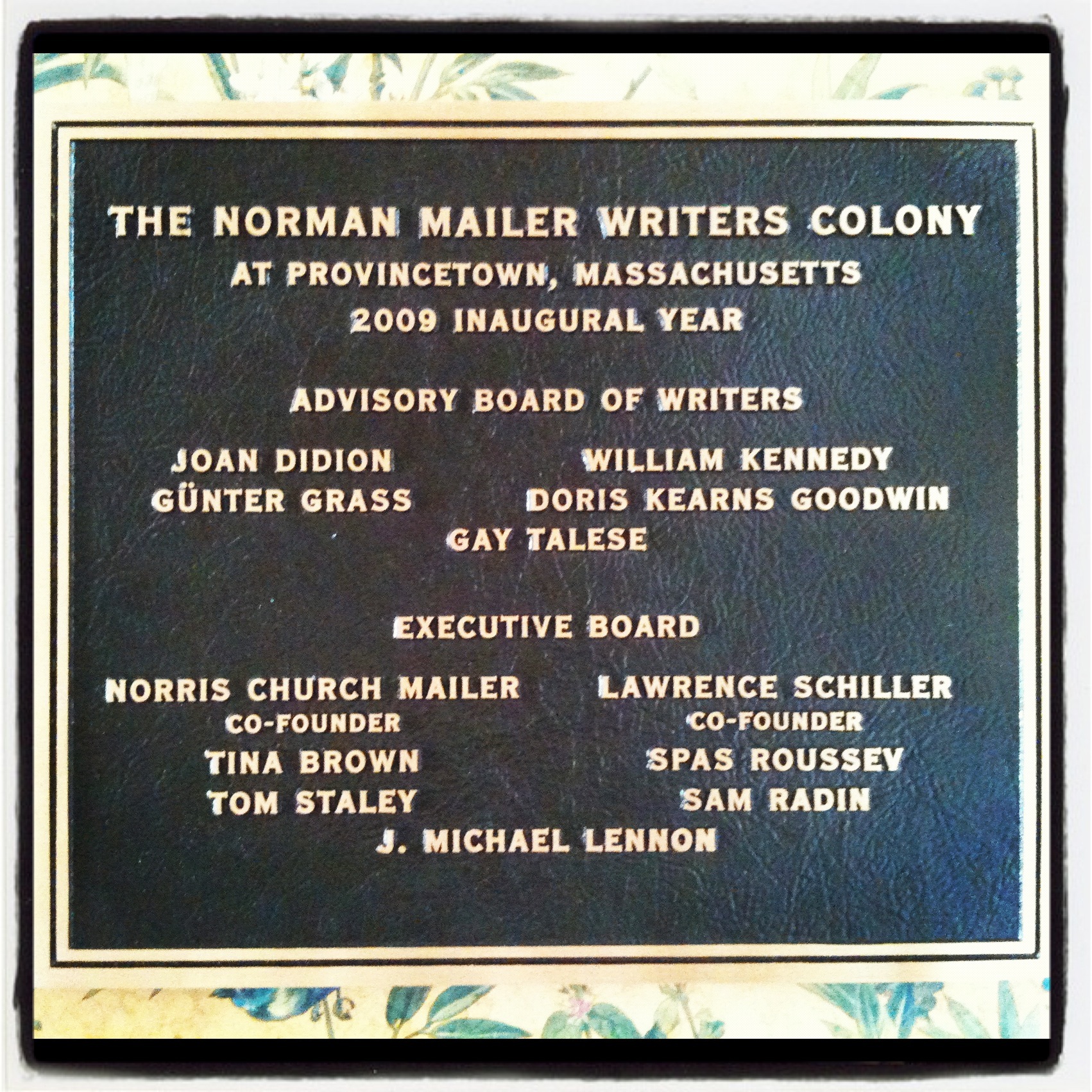
Cape Cod and The Norman Mailer Writers Colony.

I’m originally from San Francisco where brick buildings are an earthquake hazard.  Our famous rock, Alcatraz, was a prison. For two hundred years the fog hid the bay from Spain. In 1769 Gaspar De Portolá first saw the Golden Gate from land while aiming for the shores of Monterey.

Although the Mayflower reached Cape Cod in November 1620 rather than the Hudson during spring, the enterprise initiated by the Pilgrims and Conquistadores wasn’t a happy accident. Writing, like freedom, doesn’t occur as my On the Road workshop instructor Andrew Meier says, “by default.”

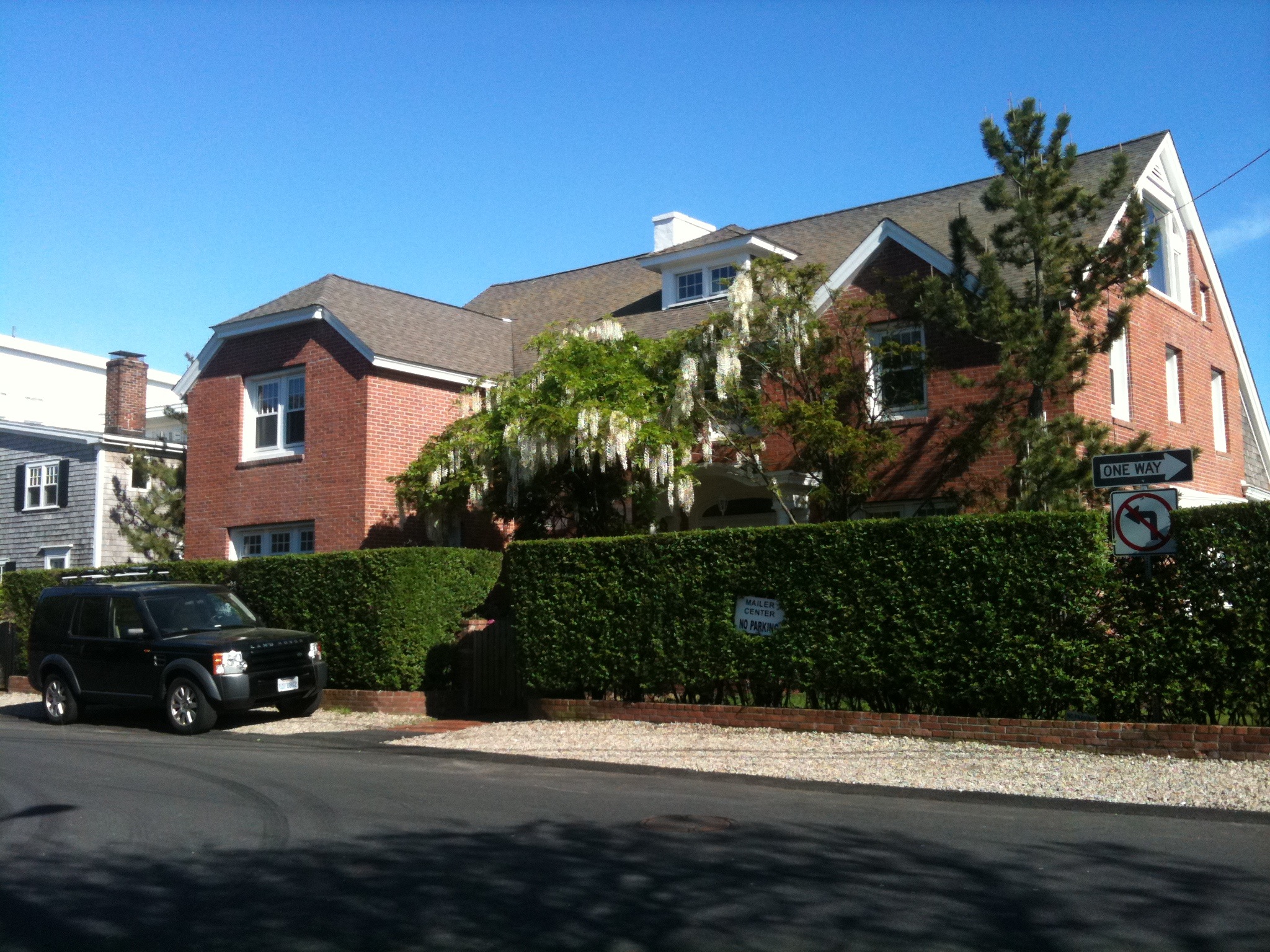
The brick house at 627 Commercial Street, #48 on the Historic Provincetown Walking Tour is my Plymouth Rock. It could have been the house where Marty, my imaginary eighth grade boyfriend lived.  A fortress of mystery, a provincial East Coast colonial house of secrets intoxicating me with curiosity of what he’s doing inside. Is he thinking of me? Marty was plotting new dimensions of complex manifolds. No amount of circling around his house could distract him from geometry. He was out of my league.

If Marty looked out of the second story window, he’d see me through a twisted trellis-vine of draping white Wisteria. The knotted tangled roots climb to a canopy of flowers that bring to mind a lace-gloved hand shielding the front door from the sun or a ladder for a midnight escape. Even the black Land Rover parked next to the imposing hedge was the dream car of my twelve-year-old-self, when freedom came with Memorial Day and the ticking spokes of a bike ride without training wheels.

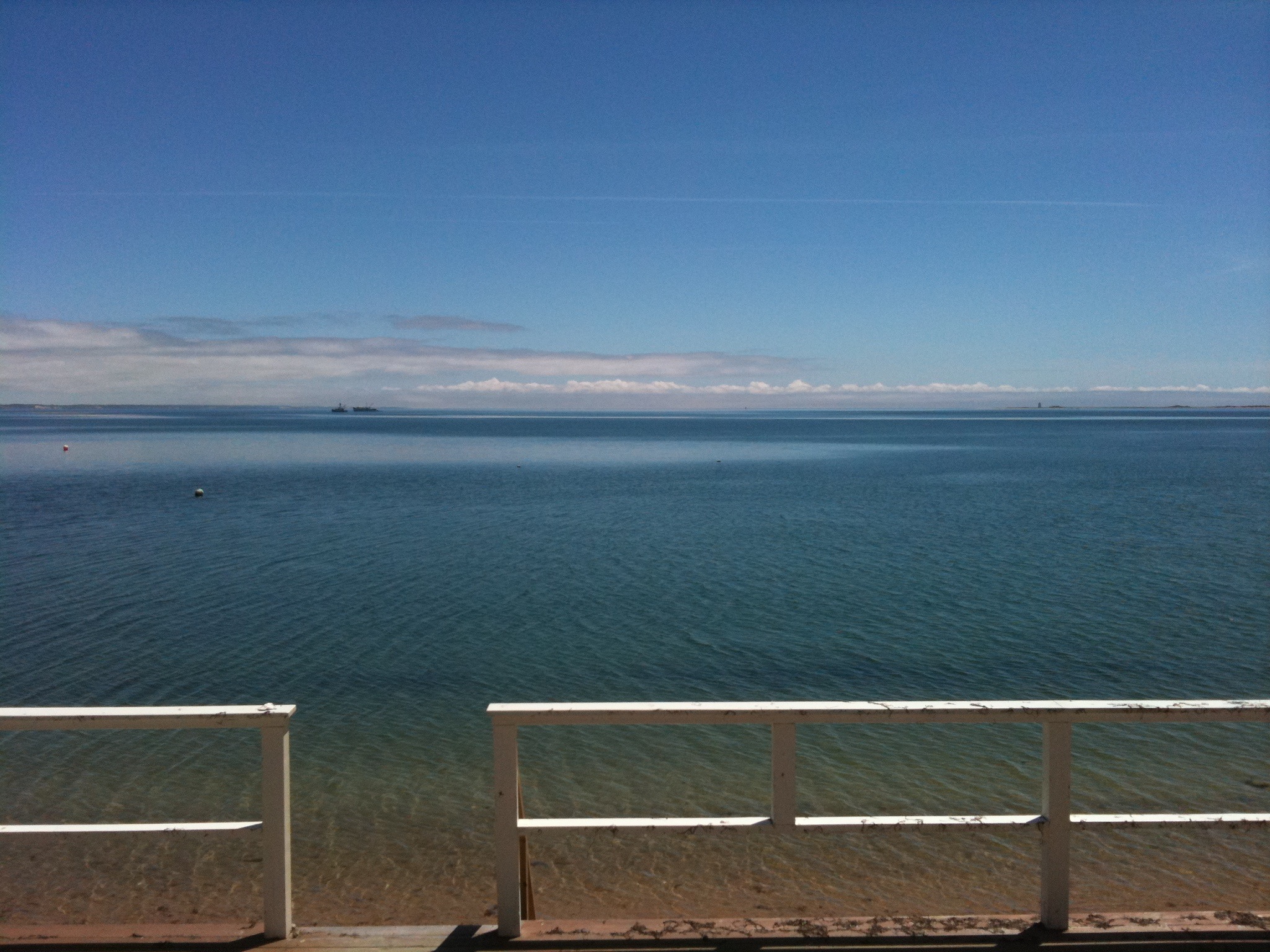
But this address isn’t a fantasy; it’s Norman Mailer’s. I don’t have to spend the day riding out in front waiting for someone to notice me and maybe come out to play – I have the key.  Standing on the deck, space and time, boy meets girl, Facebook and Twitter are lost to the tide, pulled away by The Cape the way a baker twists frosting into a swirl with a spatula. Arrested by the sight of water evaporating from sand, I’m thrust into a dimension that I’ll call Cape God: where imagination and reality meet. The plotting is up to me.

Writing is my quest for independence and new territory; I’m adrift. I’m naïve. I get dizzy, word-sick and lost. I don’t have centuries to find the right shore, I have one week at The Colony. Writing under Norman’s roof, absorbing the floral papered walls, framed book covers, “The Executioner’s Song”,  “The Armies of the Night”,  “The Naked and the Dead” – I find my sea legs. My circles become lines I navigate through a New World where I must be brave. Norman Mailer’s house is the landmark of my discovery.